A building made of
light,
science,
and the rooms
in between.
Step inside the Robert Day Sciences Center - a stack of rotated, glass-walled volumes opening onto a skylit atrium and terraces with views to the San Gabriel Mountains. This self-guided audio tour walks you through thirteen stops, from the Agora to the rooftop terraces, in roughly forty-five minutes.
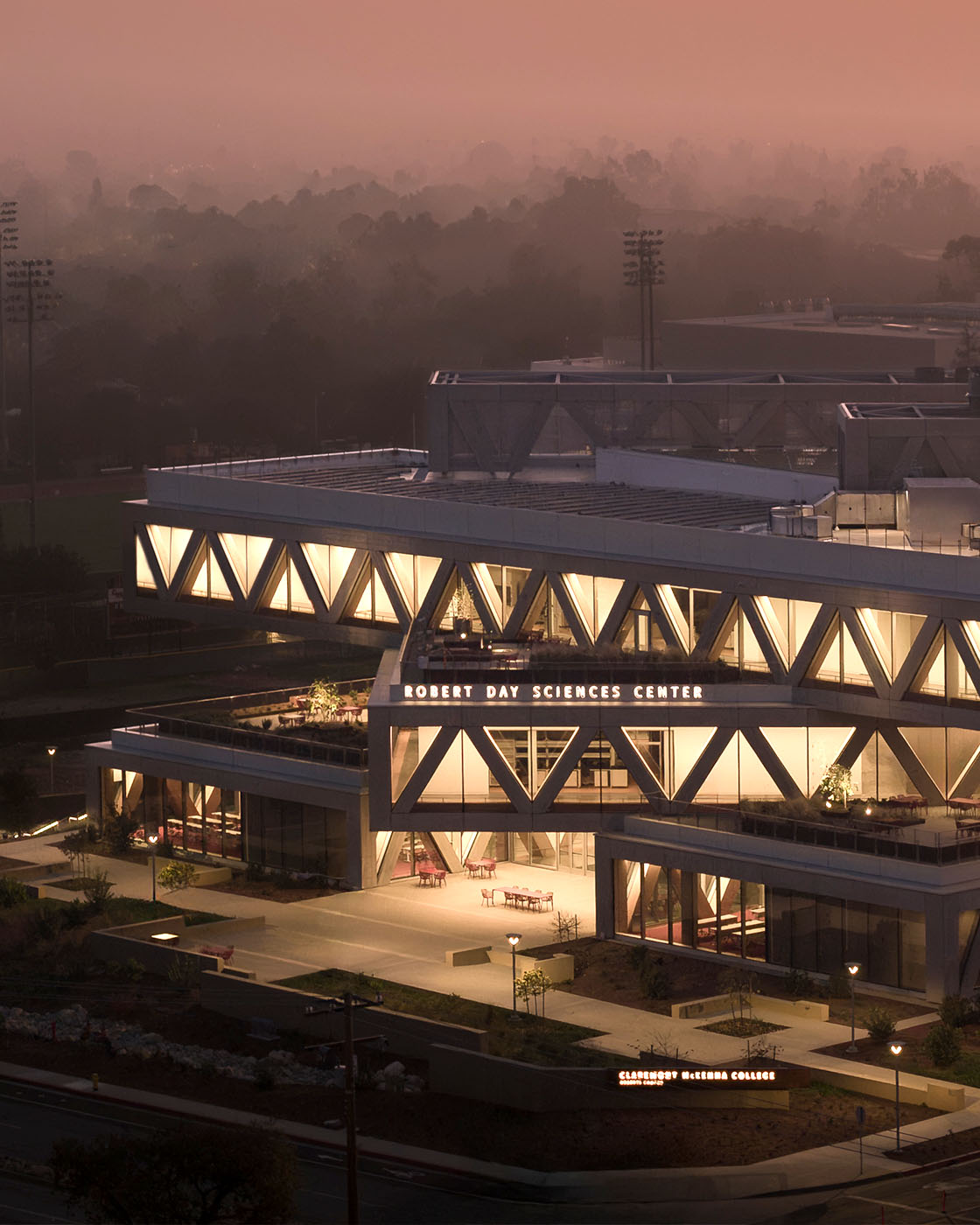
Welcome to the Robert Day Sciences Center.
Welcome to the Robert Day Sciences Center!
As you step inside, take a moment to look around. The central atrium soars above you, filled with light and offering open views into classrooms, labs, and collaborative spaces. The building's unique design - stacked rectangular blocks rotated with each floor and topped by a skylight - makes the science happening inside visible, while creating flexible, inviting spaces for students, faculty, and the community to connect.
This is the home of the Kravis Department of Integrated Sciences, where students explore science and technology through a multi-disciplinary, computational approach across fields like gene research, brain science, and climate studies. Thanks to the generous support of our donors, the Robert Day Sciences Center features spaces like the Innovation Studio, Quantum Library, and Agora - places to collaborate, experiment, and share ideas. Don't forget to check out the terraces, which frame stunning views of the San Gabriel Mountains.
We hope you enjoy your self-guided tour, and welcome to the Robert Day Sciences Center - a place where science, learning, and community come alive.
Home of the Kravis Department of Integrated Sciences - where gene research, brain science, and climate work share a single, open floorplate.
Designed by Bjarke Ingels Group and located at 681 Claremont Blvd., the building lifts its rotated floors around a multi-story atrium so that almost every lab, classroom, and collaborative space is visible from the others. Science here is meant to be seen.
Three rooms worth standing still in.
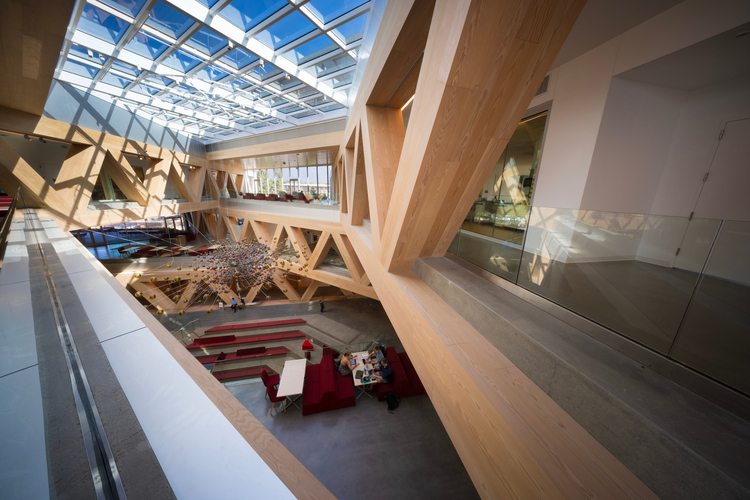
The Atrium & Skylight
The heart of the building. Look up: every floor is visible. Look in any direction: a classroom, a lab, or someone working.
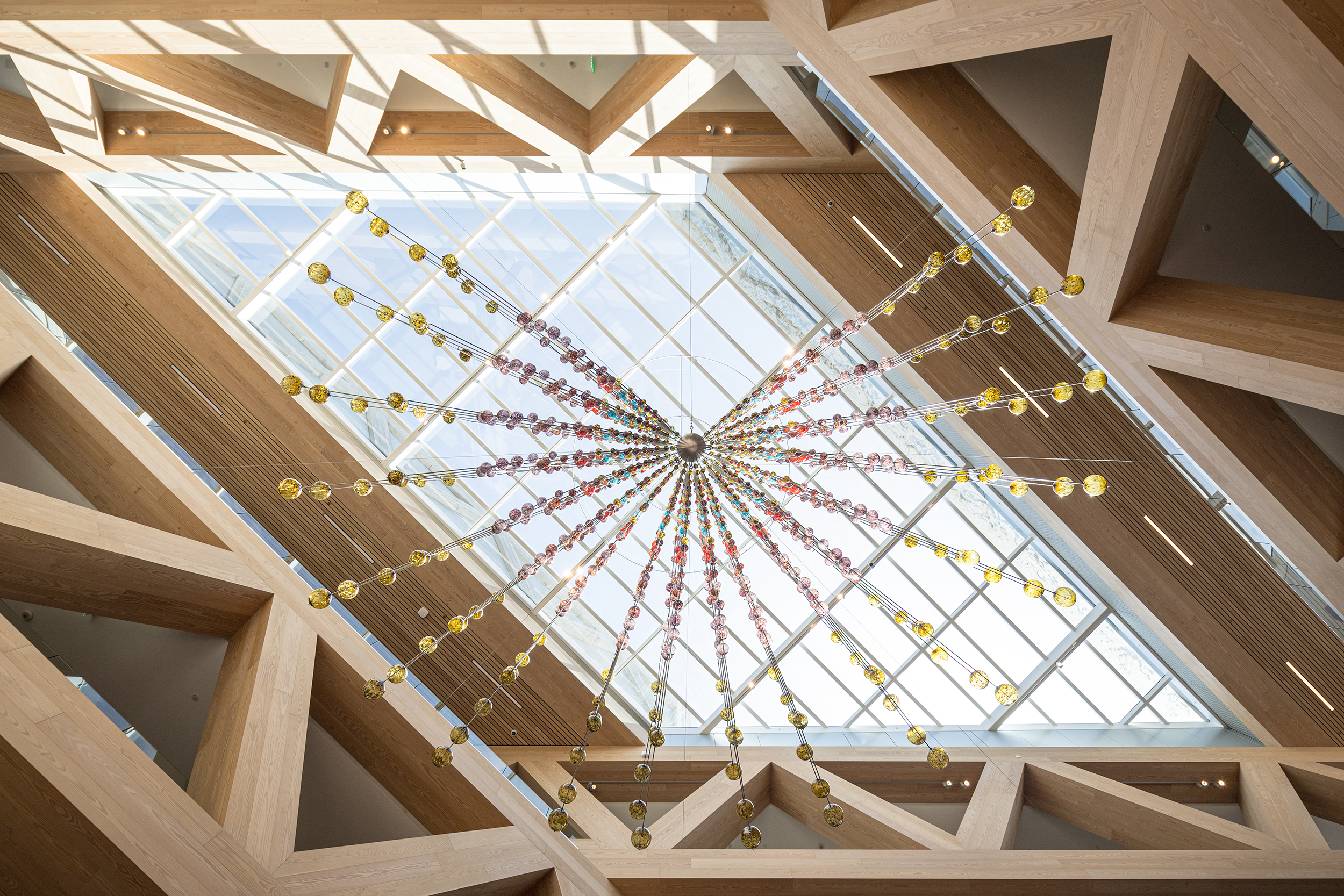
Magnetic Field - Damián Ortega
Eighteen stainless rings, one suspended sphere, and 1,476 colored glass orbs charting the Earth's magnetic field.
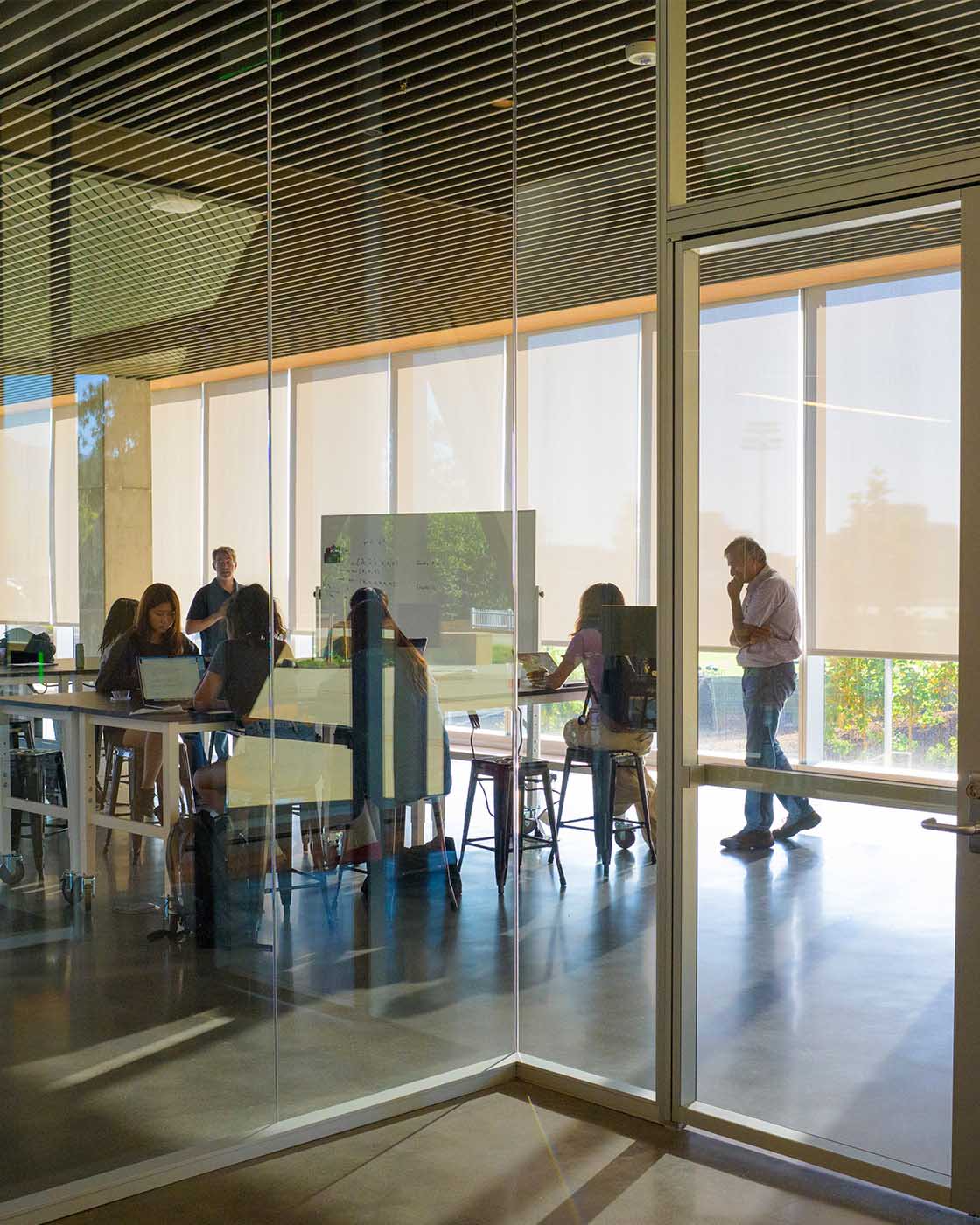
Innovation Studio
A makerspace where sensors, machine learning, and student prototypes meet the actual campus as a test bed.